

Note 30 · Growth stories
Brawl Stars makes its audience part of the reveal
A little play. Something new to reveal.
Connect a satisfying playable action to a story the audience helps advance. Test one creator and one challenge, then follow ordinary play after the incentives end. A filled community meter alone does not prove useful growth.
The audience has a job to do.
A creator says “come play.” A viewer watches, perhaps installs, and the relationship ends there. What if playing gave that creator something new to show tomorrow?
Supercell announced #CreatorCoffins on 23 October 2026, scheduled for 26–29 October. Players find a creator’s code on social media, enter it in Brawl Stars and complete daily tasks toward community rewards.
The first community goal unlocks a physical coffin for the creator to reveal from the following morning. Its gift belongs to the creator; players’ rewards are separate. Supercell explains the distinction.
Our read: the interesting design is the exchange. A video can send someone into the game; their play can help produce the next video. The viewer becomes a contributor to a story they might want to follow.
This is a pre-event design analysis, reviewed on 25 October. There are no event outcomes yet to assess, and the announcement provides no iOS-specific growth results. Brawl Stars is available on iPhone and iPad; the experiment below is for a small iOS team, not a forecast for Supercell.
Put the next action beside the progress.
Play here. Follow the story there.
 Open full image
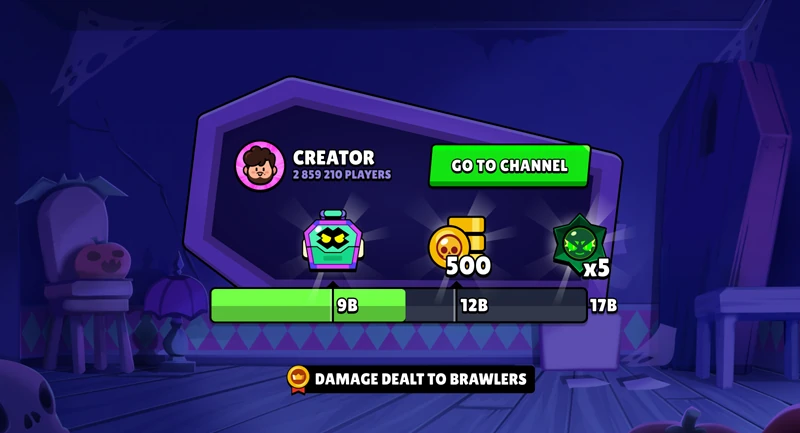
The preview displays 2,859,210 players, thresholds of 9B, 12B and 17B, plus reward quantities 500 and ×5. These are published illustration values, not observed event results or targets for your game.
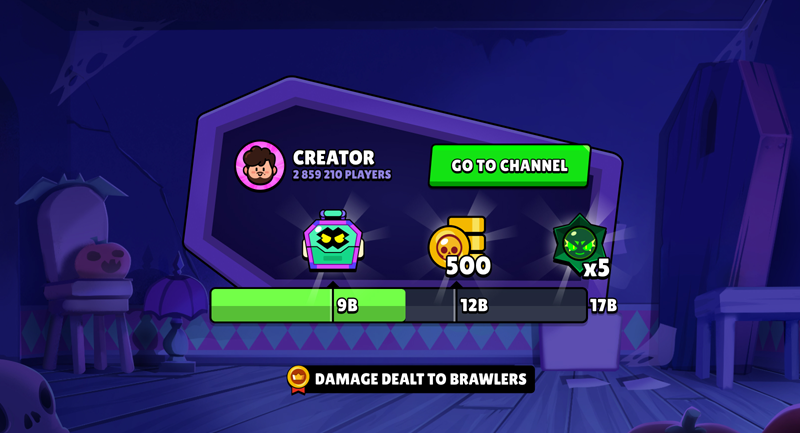
Notice how little explanation is needed to connect the meter with the creator. Our design observation: keeping the channel destination beside progress makes the off-game story easy to find again. It does not establish that anyone will click or return.
A useful prototype question is whether a player can explain both consequences of one action: what changes in the game, and what their community gets to see next. If those answers require a long promotional message, simplify the challenge before commissioning more creator content.
A social detour has to earn its place.
There is no in-game code list. That sends discovery outside the game. For a smaller title, copying this requirement could create an empty doorway: a new player may have neither a favorite creator nor a reason to search.
Our recommendation is to prototype a playable challenge first, with creator participation as an optional extension. Watch whether unfamiliar players can reach a satisfying round without help. Only test a mandatory detour if you have a specific reason to believe it adds value.
Pick a creator whose audience already enjoys the challenge’s underlying activity. The Cal AI audience-fit story is a useful reminder to test the match before increasing a creator budget. Recognition and useful intent are different things to investigate.
Try one shared challenge before building an event machine.
Hypothetical iOS experiment: a puzzle game partners with one puzzle creator for a three-day challenge. The creator demonstrates an ordinary level. Players’ completed rounds advance a shared goal; reaching it unlocks a video in which the creator attempts a harder version. Keep the reward modest and the normal game fully playable.
Before launch, agree on a fixed fee, production limit and fallback reveal time if the goal is missed. Otherwise a quiet first day could leave both the community and creator waiting for an ending that never arrives. Do not base the goal on a large game’s preview numbers.
Use a dedicated campaign link and record the useful actions: first install, first completed round, challenge contribution and a completed ordinary round after the event. Report new installs separately from existing players who join.
For the new-install cohort, measure the share completing an ordinary round on days 4–10 after the event ends, with all attributable first installs during the event as the denominator. Wait until the full window closes. This is a proposed learning measure, not an industry retention benchmark.
Also count creator fees, production time and support work. The pilot can expose confusing handoffs and reward-only participation. It cannot establish incremental acquisition or retention without a credible comparison. The next decision is whether this audience enjoys the game after the story ends—not whether the meter filled up.
Sources & further reading
- Supercell — #CreatorCoffins announcement, 23 October 2026
- Supercell — Brawl Stars, official US App Store listing, accessed 25 October 2026
Company results are attributed to the sources above. Examples are hypothetical experiments proposed by Piiko, not industry benchmarks. This is independent analysis; app icons identify their respective owners. Cover illustrations are original Piiko editorial art.