

Note 42 · Growth stories
Galatea started with a slideshow and a paid test

A small start. A real decision.
Build enough to deliver one complete paid promise. Measure reading and verified purchases, then let the missing evidence choose the next investment.
A slideshow was enough to ask the first question
Galatea’s first reading app was a slideshow filled with screenshots of text. Inkitt founder Ali Albazaz recalls building it in roughly three or four days, running about $20 a day in ads, and seeing someone spend $10.
In the founder interview published by RevenueCat on 25 November 2026, he explains the problem behind the experiment: selling ebooks through Amazon left Inkitt without the direct reader relationship it wanted for selling the next part of a book.
This is a historical founder account. The interview does not specify the initial test’s date, platform, country, audience size or campaign duration. The amounts are anecdotal spending and purchase figures, not an iOS acquisition benchmark or a recipe for profitability.
Our reading of the decision: the team reduced the product until a reader could still make the choice that mattered. Would someone pay for this story in a separate app? A first payment makes that possibility real. It leaves repeat reading and acquisition economics unanswered.
Today’s reader contains decisions the first test could defer
Galatea’s current official iPhone gallery presents adjustable reading appearance and downloadable chapters. These are useful examples of separate product investments: making a page comfortable and making a story available away from a connection.
Reading comfort and offline access
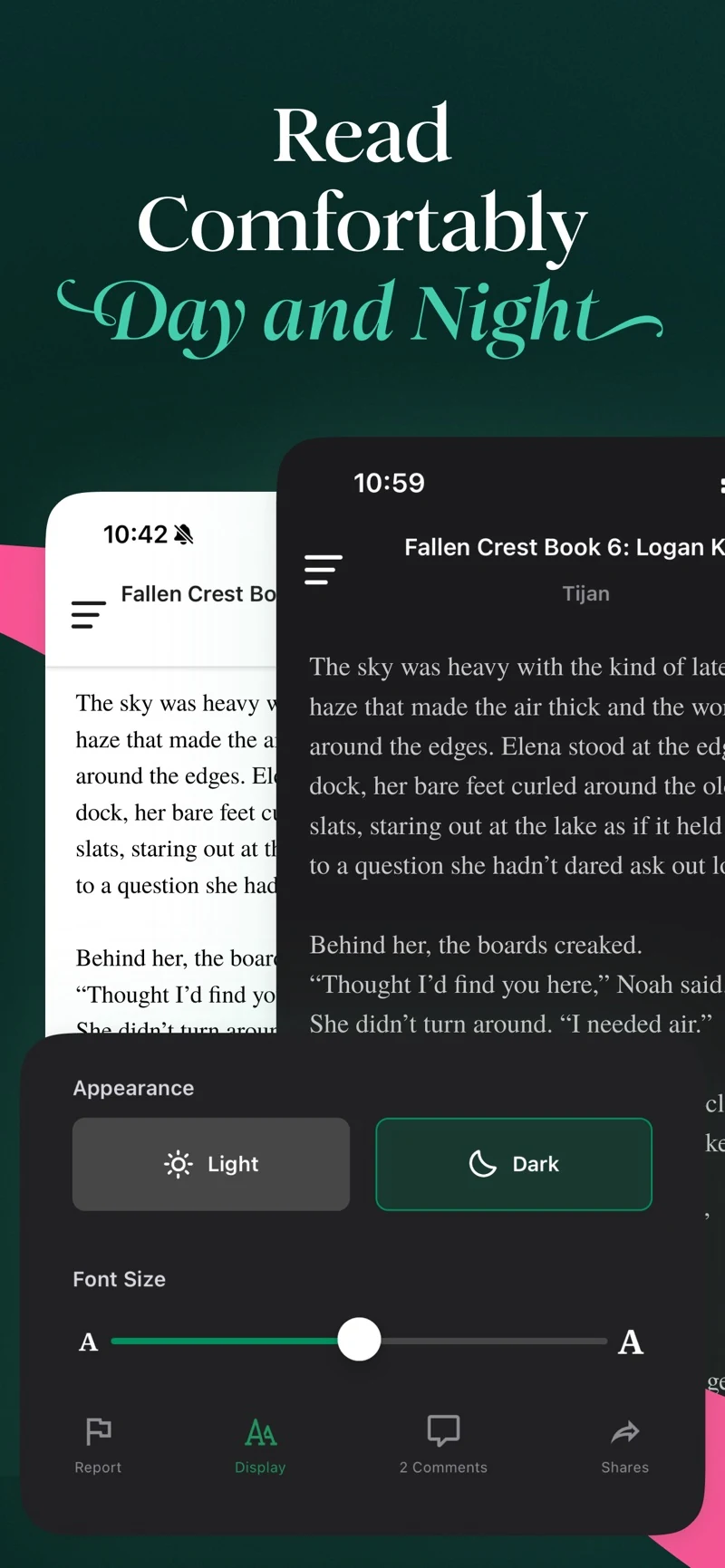 Enlarge reading example ↗Make the page comfortable
Appearance controls change how the same story can be read.
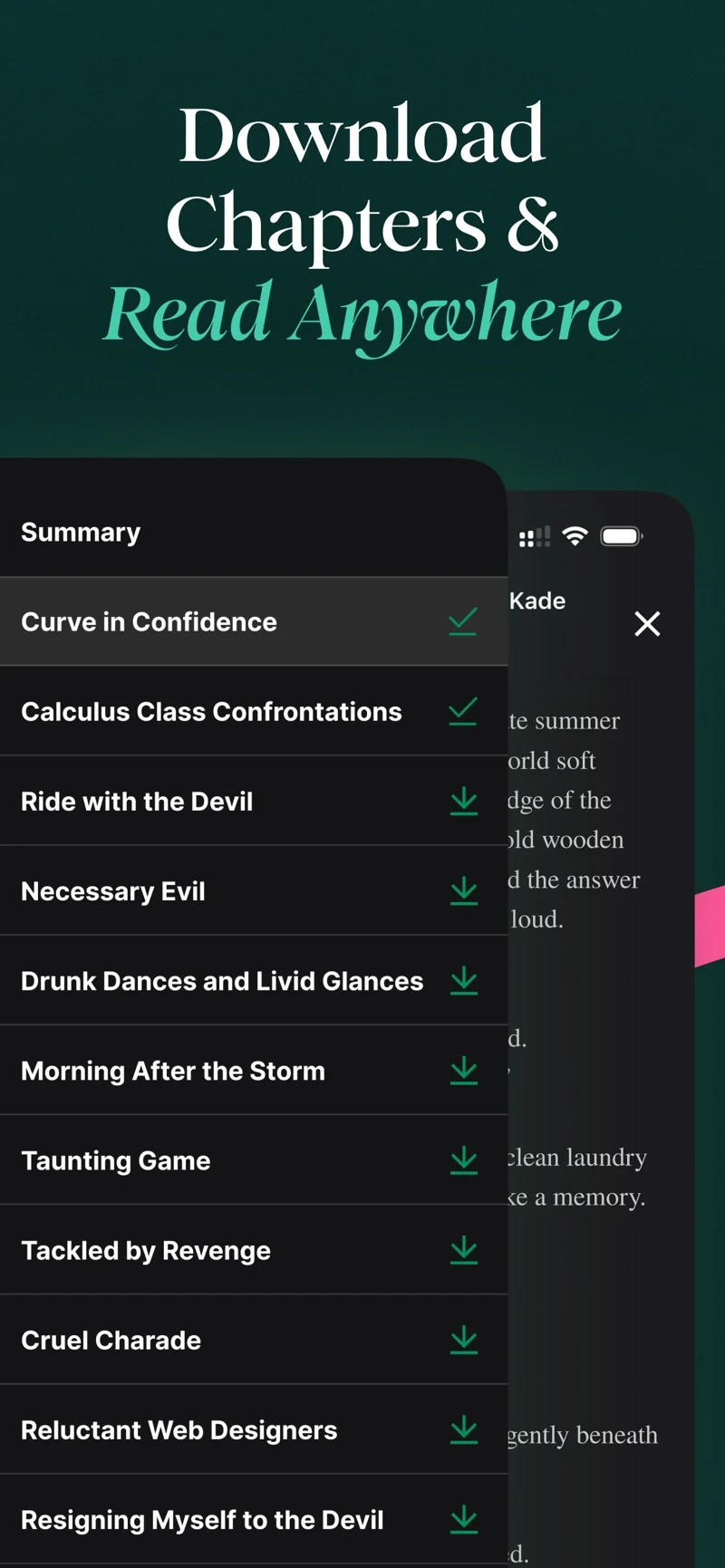 Enlarge downloads example ↗Make the story available
The chapter list presents downloads as a distinct reading convenience.


For a new iOS reading app, preserve legible text and accessibility from the start. A simple native reader can do that without reproducing the screenshot slideshow. Offline access can wait if the test promises a short session at home; it belongs in the first version if the idea is reading on a flight. The situation you are testing decides what is essential.
Offer one complete story before building a library
Original hypothetical iOS pilot: a small team has written one short mystery. Publish a readable free opening and offer the complete remaining story through a clearly priced one-time purchase. Deliver the ending to buyers. This tests a finite purchase; it says nothing yet about demand for an ongoing subscription.
Use one ad concept, audience and storefront, with a fixed total spending cap the team can afford to lose. Recruit for seven days and follow every new reader for 14 days from first open. Keep the story, price and offer position stable. These are proposed test windows, not Galatea’s reported method.
Count unique new readers who open the app, finish the free opening, complete a verified purchase and finish the paid story. Report each count against all new readers in the cohort; also inspect the step between finishing the opening and buying. A handful of buyers remains a small sample, however encouraging the first sale feels.
Let the missing evidence choose the next build
If readers leave before the offer, investigate the opening and reading experience. If they finish the sample but rarely buy, the price, promise or story may need work. If buyers reach the ending, test whether they want a second story before commissioning a library. These are diagnostic hypotheses, not causal conclusions from a funnel.
Keep a separate 14-day economics view: net purchase proceeds after store deductions and refunds, minus acquisition spending and variable delivery costs. Include non-buyers in the cohort. This observed contribution excludes fixed development and writing costs and is not lifetime profit. Reconcile later refunds when they arrive; a purchase amount alone cannot establish affordable acquisition.
The first paid test should buy a better next decision. For this team, that might be a stronger opening, a different offer or a second story—not a larger feature list.
Sources & further reading
- RevenueCat — Ali Albazaz’s founder interview, published 25 November 2026; historical initial test, exact date and platform unspecified
- Galatea — official US App Store listing, icon and iPhone gallery, accessed 26 November 2026
Company results are attributed to the sources above. Examples are hypothetical experiments proposed by Piiko, not industry benchmarks. This is independent analysis; app icons identify their respective owners. Cover illustrations are original Piiko editorial art.