

Note 32 · Growth stories
Praktika: a viral avatar is not always a good coach

A little attention. Something useful to learn.

Separate the character, delivery and useful task before moving a successful creative idea into your app. Test one ingredient, then follow helpful completions and repeat use. Social attention alone does not validate product behavior.
Funny in the feed. Frustrating in a lesson.
Praktika found an awkward limit to its growth playbook: people could enjoy watching an avatar without wanting that personality to teach them.
In a founder interview published by RevenueCat on 28 October 2026, CEO Adam Turaev describes profane, exaggerated avatars that spread on social channels. The team brought them into the app. He says the response disappointed: people liked the characters’ appearance but objected to their language. The distinction he draws is between companionship and coaching.
The same interview recounts an earlier creator success built around correcting a learner during conversation. These are historical accounts, not October feature announcements. Exact experiment dates, samples and platform splits are unspecified; neither story establishes a causal iOS retention result.
The character gets noticed. The correction gives it a job.
Look at two examples from Praktika’s official US iPhone gallery. The first places a grammar correction in front of the avatar. The second puts a distinctive character inside a speaking-practice conversation. Appearance and usefulness can share the same screen.
A visible personality, a specific learning promise.
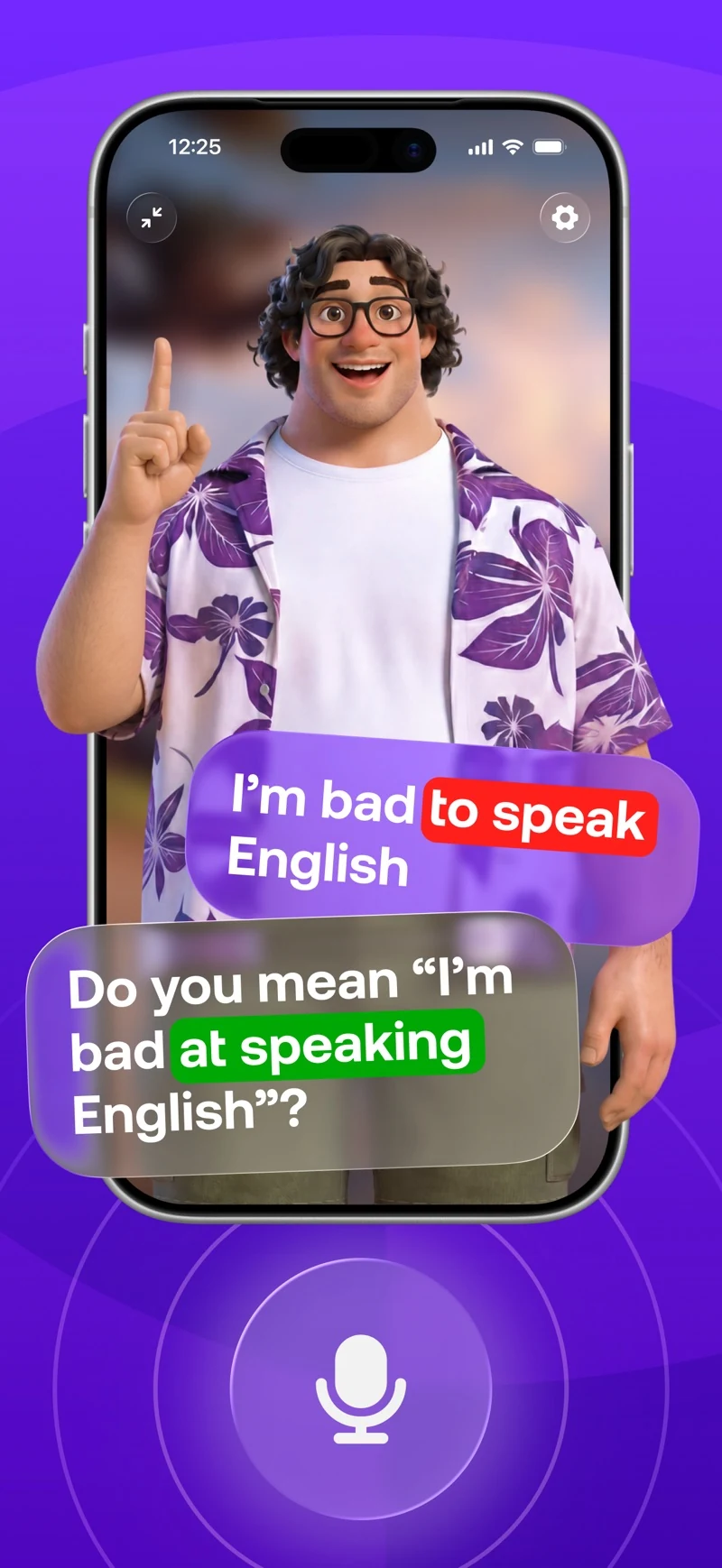 Open full image Show what the tutor helps fix.
The visible contrast is a small, understandable language improvement. It gives someone a reason to try speaking, beyond meeting the character.
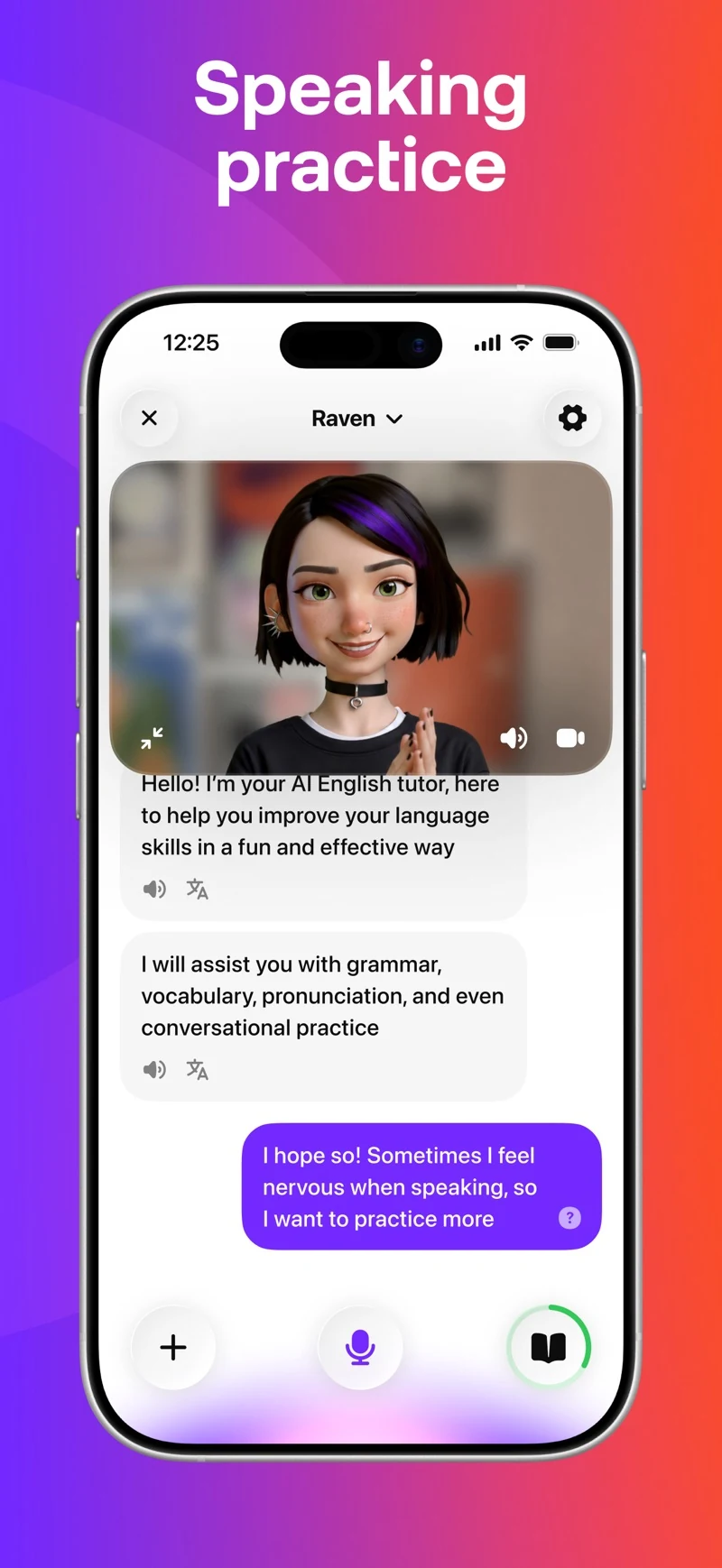 Open full image Keep the learner’s purpose visible.
A distinctive avatar sits above a learner’s request for practice. The screenshot does not show the profane-avatar experiment or establish which personalities perform best.


Split a successful creative into its parts.
Our interpretation: a popular video bundles several ingredients. There is a recognizable character, an entertaining delivery, a problem and a promised outcome. Copying the whole bundle into a product assumes the viewer wanted all of it.
For a small iOS team, write down which ingredient you want to transfer. A striking character design is different from an abrasive response style. A dramatic editing rhythm is different from making the user wait. Keep the useful action visible while testing the new ingredient separately.
For example, a budgeting app could use a theatrical character to explain a spending mistake in a video. That does not settle how the app should respond when someone is worried about an actual bill. The user’s situation changes the job of the same creative idea.
Try the handoff before rewriting the product.
Hypothetical iOS pilot, not Praktika data: an interview-practice app has a playful coach people like in short clips. Before changing its live coaching behavior, show the clip to prospective users and ask what help they expect. Then let them attempt one practice answer in a prototype. Watch where their expectation and the response diverge.
If that uncovers a useful change, test one element with consenting pilot users: keep the coach’s appearance, exercise, feedback criteria and price the same; vary only the response style. Randomly assign users and keep that assignment stable. A small qualitative pilot can reveal a mismatch; it cannot establish a reliable conversion lift.
Define a useful completion as a recorded practice answer followed by a revision after feedback. Compare the share of all assigned users who complete that sequence within 24 hours, then the share who repeat it on another day within seven days. Set the timezone and analysis date in advance, wait for complete windows, and retain failures and dropouts in the denominator.
Read complaints alongside those behaviors. More sessions would be a poor trade if people return to argue with an unhelpful coach. If the promising result survives a larger test, follow refunds and net proceeds before increasing acquisition spend.
The Cal AI story examines who a creator reaches; this question starts after the click. Use the event-planning note to make the promised useful action measurable.
Sources & further reading
- RevenueCat — original interview with Praktika CEO Adam Turaev, published 28 October 2026; historical experiments, exact dates and platform splits unspecified
- Praktika — official US App Store listing and iPhone gallery, accessed 29 October 2026
Company results are attributed to the sources above. Examples are hypothetical experiments proposed by Piiko, not industry benchmarks. This is independent analysis; app icons identify their respective owners. Cover illustrations are original Piiko editorial art.