
Note 41 · Growth stories
MONOPOLY GO pairs a comeback gift with a lasting collectible
A gift today. A keepsake for later.
Give the invitation and the lasting reward separate jobs. Test one attainable cosmetic milestone, then measure ordinary play after the event closes.
A gift to claim. A collection to build.
MONOPOLY GO!’s next Marvel season offers a useful contrast in reward design. Players past board 4 can claim an Avengers Shield. Collectors have another goal: each rare Super Sticker unlocks a permanent Super Token cosmetic. Scopely’s announcement.
Announced on 23 November 2026, Doomsday Go! is scheduled for 25 November 2026–27 January 2027. This is a preview of the design. The publisher reports no participation, retention or sales results for it, and no iOS-specific outcome.
Our reading: the gift makes an invitation concrete; the collectible can give that visit a longer purpose. A small iOS studio can separate those jobs before deciding how much seasonal content to build.
The invitation names something you can get.
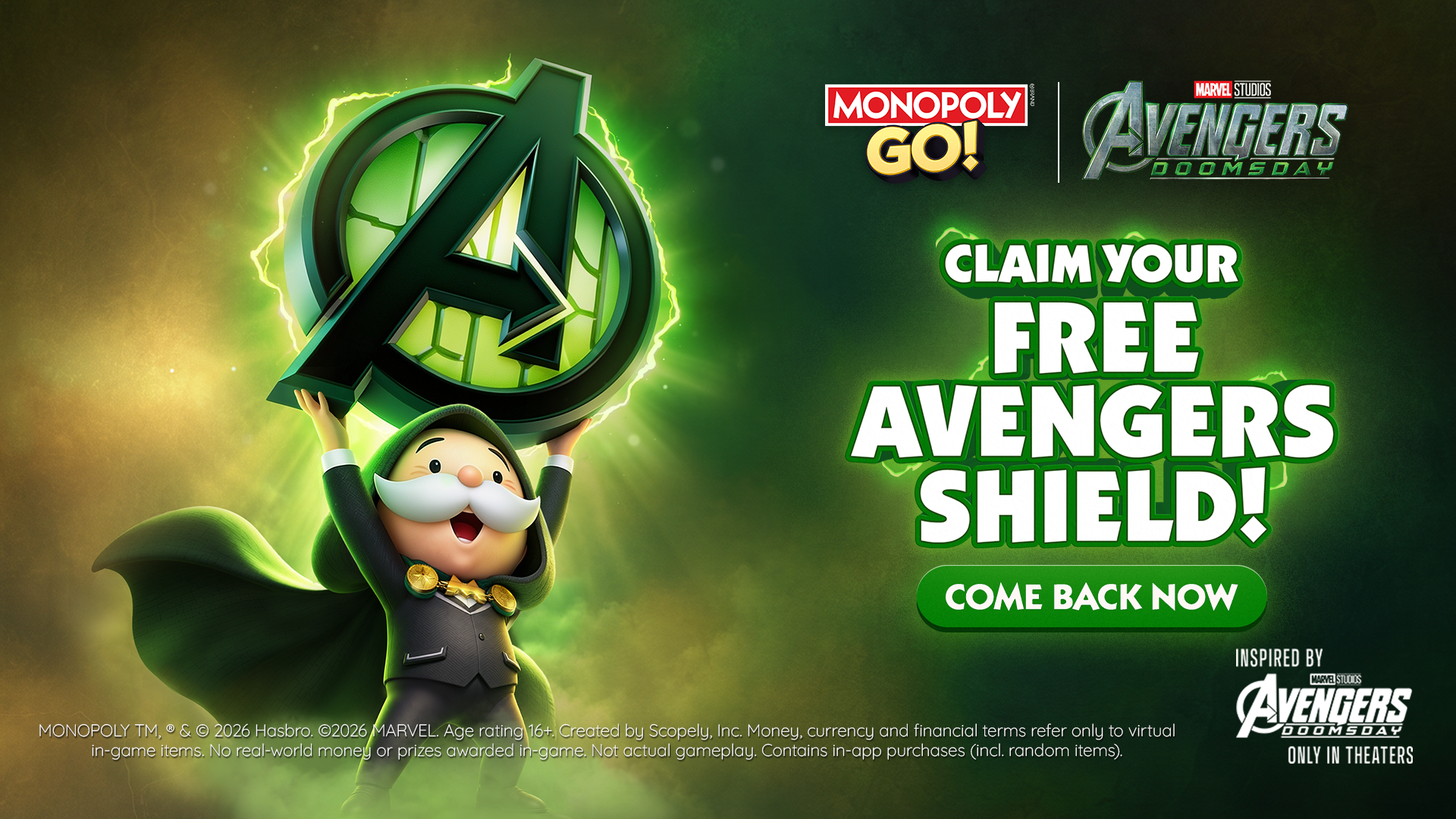 View the original campaign image ↗
The claim window runs with the season, after passing board 4. The picture shows the promise; the written rule supplies the entry condition. Neither tells us how many people will return or claim it.
For your own iPhone game, walk through that gap. An invitation to collect a gift should lead to a recognizable claim and a playable next step. Account recovery, an unexplained progress requirement or several offer screens can interrupt the trip. Observe that first returning session before commissioning more campaign art.
What survives the season?
Scopely calls the Super Token unlocked by each Super Sticker a permanent cosmetic. That connects a collecting milestone to something the player can keep. The announcement does not give acquisition odds or the effort needed to reach those milestones.
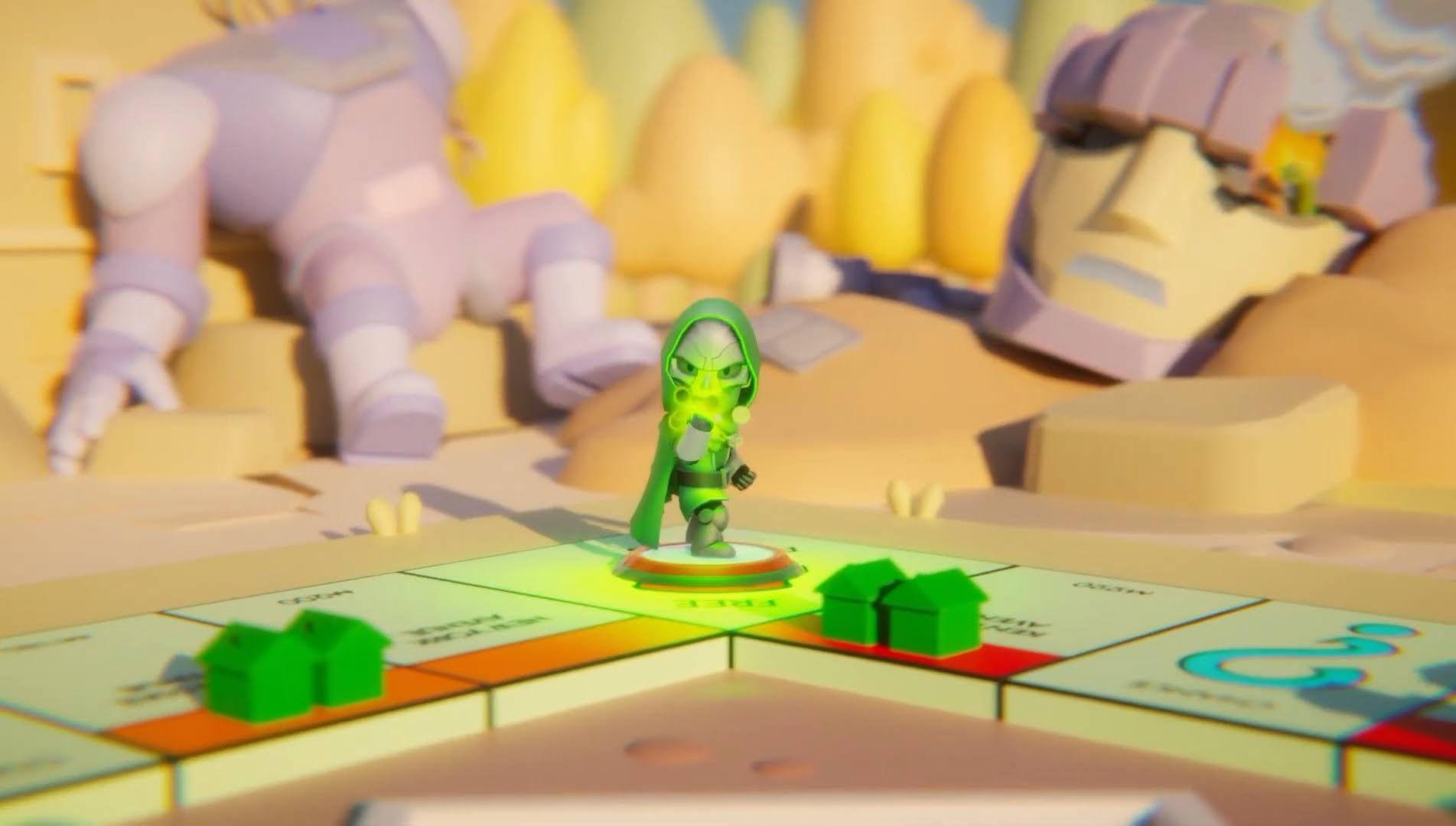 View the original promotional still ↗
Our design hypothesis: a souvenir can connect an event to ordinary play afterward. Its value depends on whether players want to use it and can reasonably earn it. A long collection with an unreachable ending could leave a very different memory.
Try one keepsake in one short event.
Hypothetical iOS puzzle-game experiment: run a seven-day event for accounts inactive for at least 30 days. Before sending invitations, randomly assign eligible accounts to two groups. Give both the same invitation, welcome gift, puzzles and usual rewards. One group also sees a permanent, original board theme earned by finishing three event puzzles. Show the requirement before play; use a reachable milestone with no purchase requirement.
Compare completed event puzzles per assigned account during days 1–7, then the share completing an ordinary puzzle during days 8–14 after the common event start. Include people who never open the invitation in both denominators. Theme claims and equips explain use; they do not replace the return measure. A small sample may be inconclusive.
This tests adding a lasting reward to the same event. It does not isolate the invitation’s effect or prove that permanence alone caused a difference. Record art, implementation and support costs before deciding whether another event is worthwhile. Define the events · Measure play after a reward ends.
A permanent reward creates ongoing work.
Use an original theme your team can support in future iOS releases. Check that it remains owned after an app update and after restoring a supported account on another device. Make the earning deadline distinct from ownership: the event may close while the earned item remains available.
The useful decision is whether one small, lasting addition makes ordinary play worth returning to. That is a question a studio can test without recreating an entire licensed season.
Sources & further reading
- Scopely — Doomsday Go! announcement and original campaign images, published 23 November 2026; accessed 24 November
- MONOPOLY GO! — official US iOS App Store listing, accessed 24 November 2026
Company results are attributed to the sources above. Examples are hypothetical experiments proposed by Piiko, not industry benchmarks. This is independent analysis; app icons identify their respective owners. Cover illustrations are original Piiko editorial art.