

Note 39 · Growth stories
Why Stake bought ads before the App Store search

From a news story to a name worth looking up.

Keep your brand-search budget steady while testing one new audience. Compare total new customers with a holdout before crediting either ad with the sale.
One ad meets a reader. The other meets a search.
By the time someone types “Stake” into the App Store, they already know the investing app’s name. Stake wanted to reach people a step earlier: while they were reading financial news and had a reason to remember it.
In a case study from Apple Ads and Stake’s marketing team, Stake bought placements alongside business coverage in Apple News and Stocks in Australia. It kept bidding on its own name in App Store search results. The first placement introduced the app in context. The second gave someone already looking for Stake a way to download it.
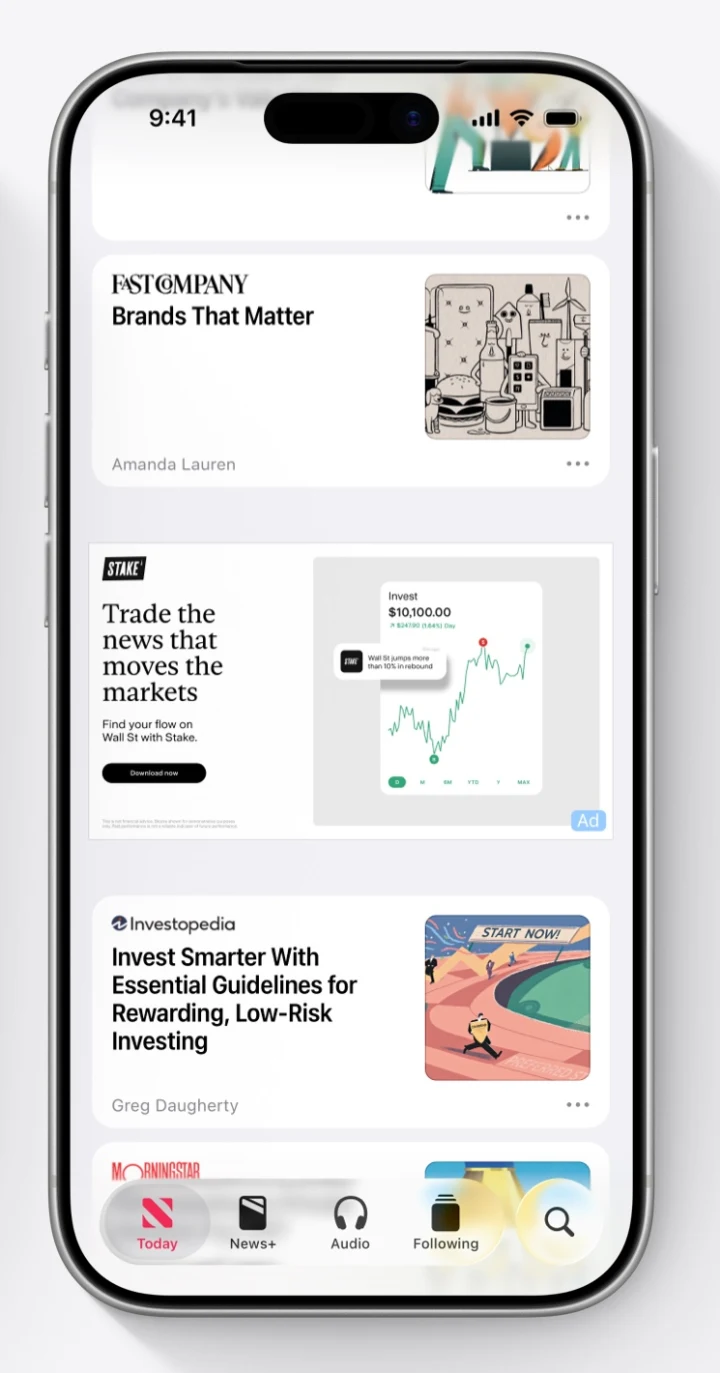 Enlarge news placement ↗Before the search
Stake’s message about trading the news sits between stories. The reader hasn’t asked for a broker.
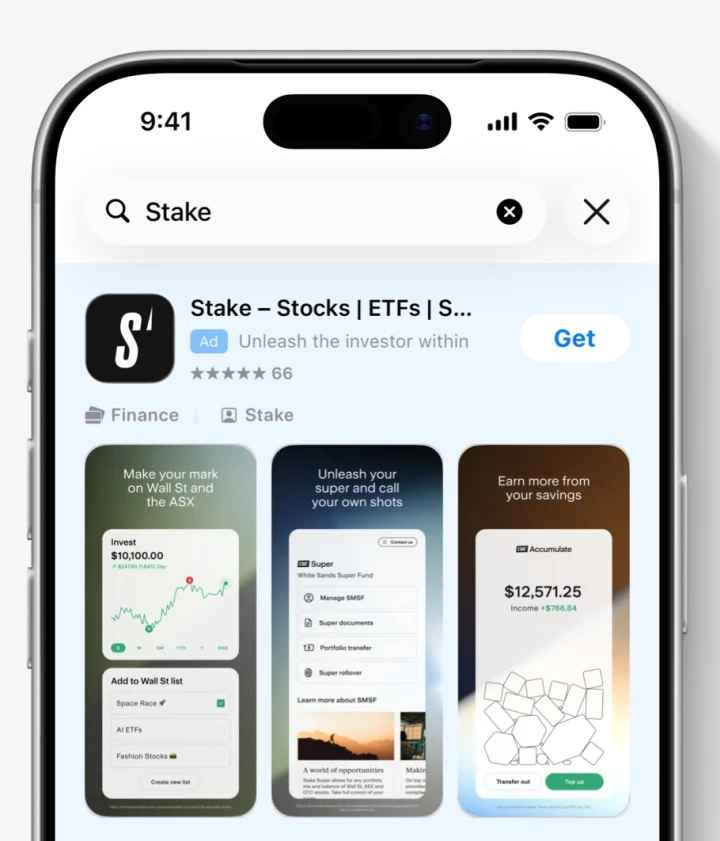 Enlarge search placement ↗After the name is known
Read the search field above the Get button: it already says “Stake.”
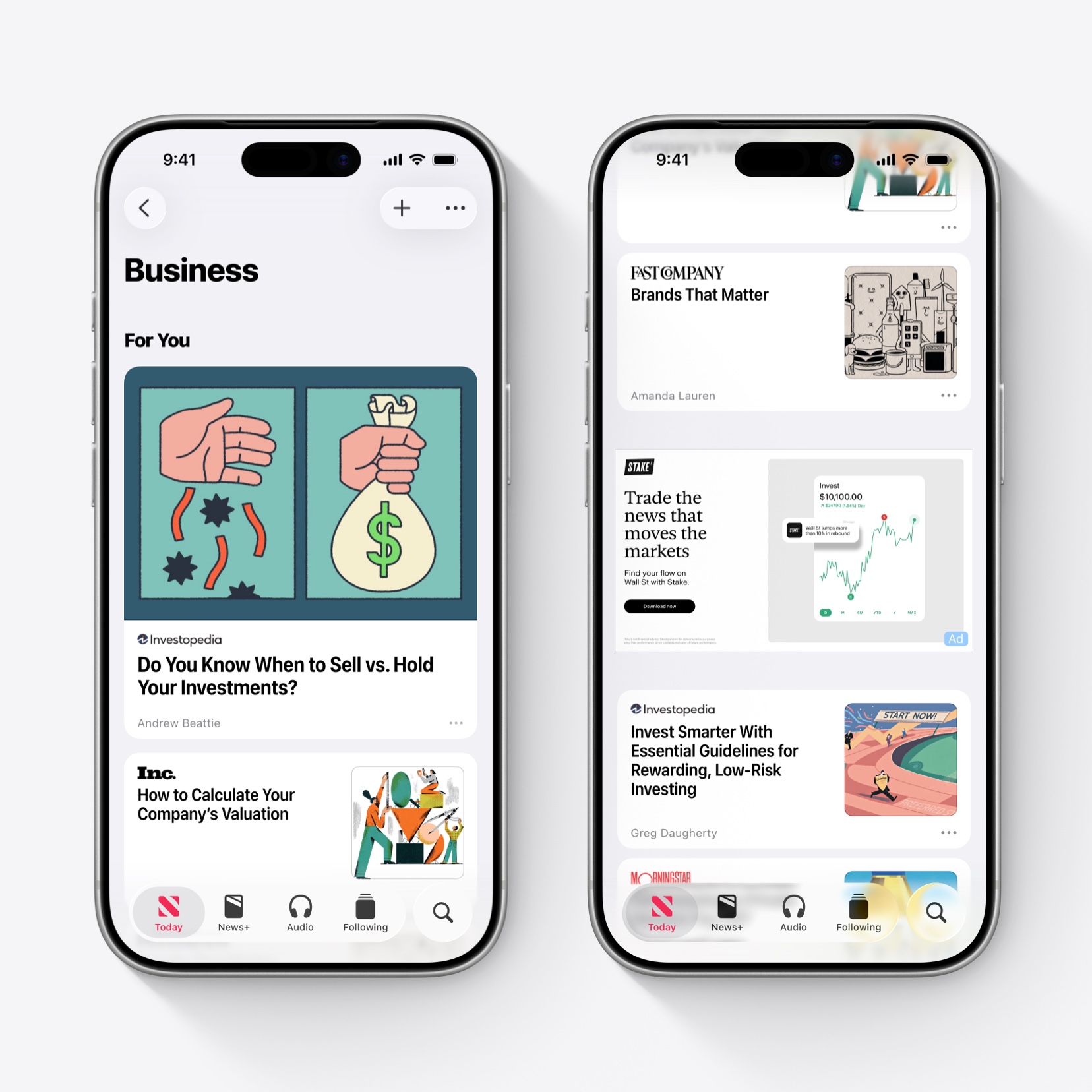
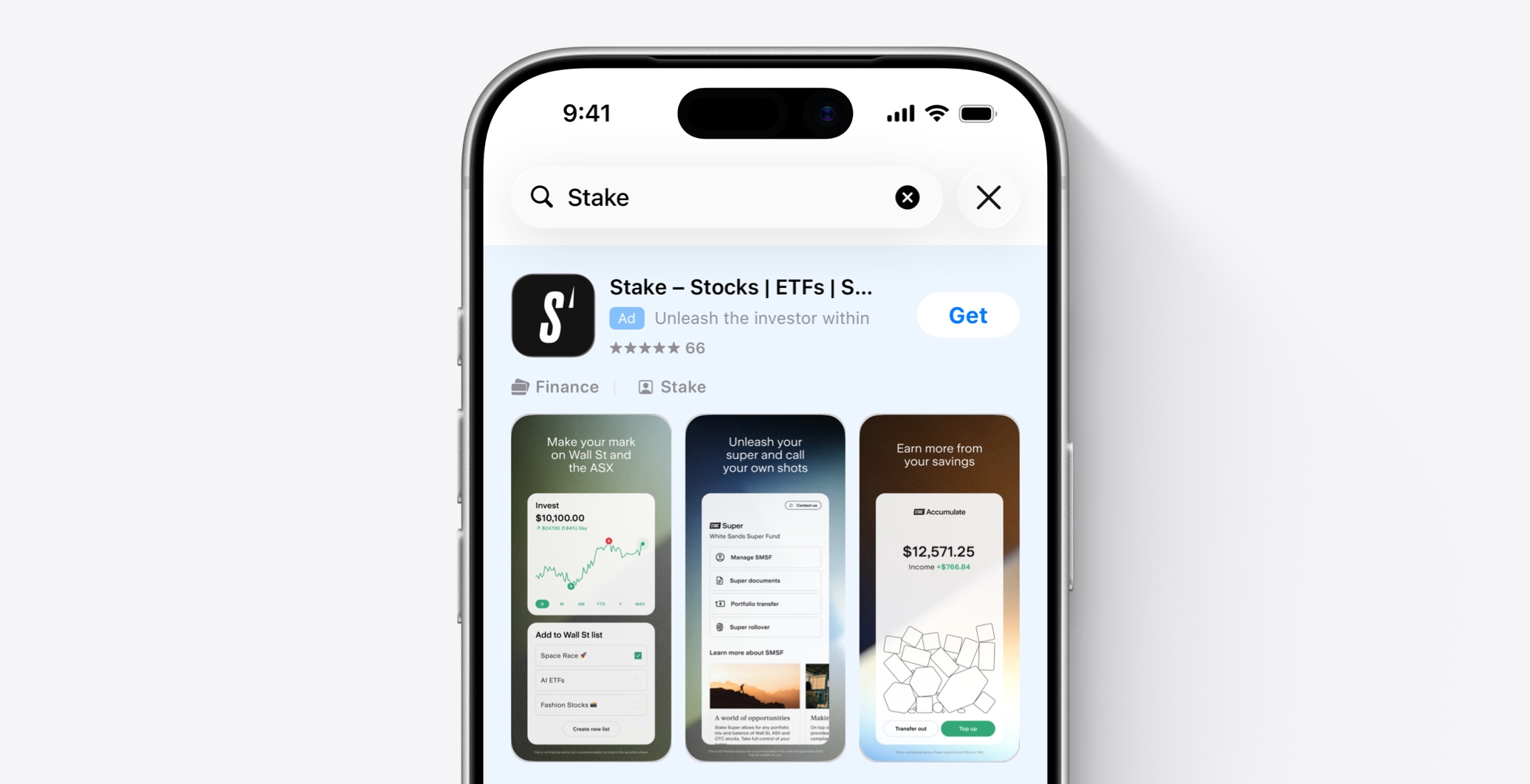
What the 18% comparison can tell you
Apple published the case on 12 November 2026. During the three-month campaign, the Finance app’s App Store conversion rate was 18% higher than its year-to-date average. That is a relative difference, not an 18-percentage-point gain. Apple doesn’t give the exact campaign dates, underlying rates, number of eligible users or denominator. The case covers Australia; it gives no separate iPhone-only conversion rate.
A year-to-date average can tell Stake this period looked different. It can’t say how many readers would have installed anyway. A brand ad might even win credit for a download that the organic listing would have received. For Stake, the business question was whether more people funded accounts; the case doesn’t publish an incremental cost per funded account.
Buy one audience and count across channels
Hypothetical iOS experiment. Suppose you sell a birding app. A regional birding newsletter can reach readers before they search for your app by name. Pick comparable regions with similar trends in new paying customers. Randomly choose which get the newsletter placement and leave the others unexposed. Keep brand-search bids, budgets, price and store page steady in both groups.
For each group, count first-time iOS customers from all channels who install during the test and pay within 30 days. Use the unexposed regions’ change from their own baseline to estimate how many customers the exposed regions would have gained anyway. Divide additional spend, including any change in actual brand-search spend, by the estimated extra customers. Compare that with your affordable acquisition cost.
If brand-attributed installs rise but total new payers barely move, keep the budget flat. If the regions are too small to distinguish a gain from normal swings, call the result inconclusive. A cheaper last tap is a different result from finding another customer.
Sources & further reading
- Apple Ads — Stake case study, marketing team interviews, reported results and original campaign images
- Apple Ads — 12 November 2026 publication announcement
- Stake — official Australian App Store listing and icon
Company results are attributed to the sources above. Examples are hypothetical experiments proposed by Piiko, not industry benchmarks. This is independent analysis; app icons identify their respective owners. Cover illustrations are original Piiko editorial art.